
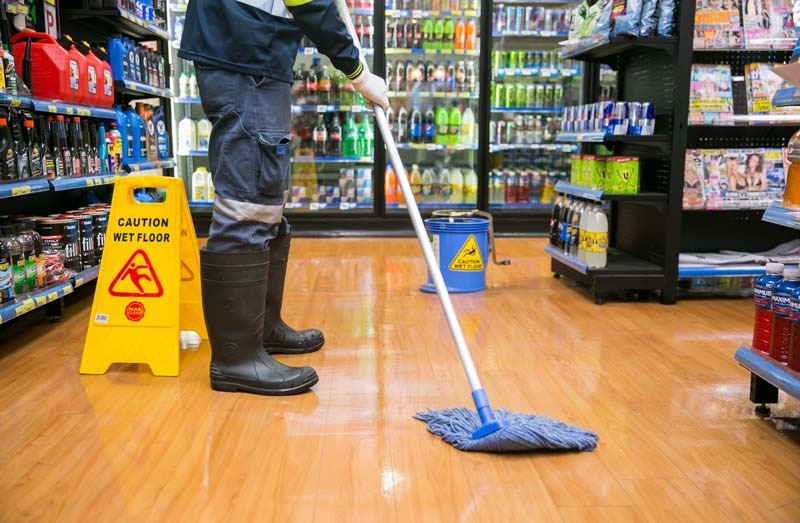
In retail, first impressions happen fast. A clean, fresh-smelling shop with spotless floors and clear glass signals “professional, trusted, worth spending money here.” On the flip side, dusty shelves, smeared windows, sticky counters, or messy bathrooms can quietly push customers to walk out, even if your products are brilliant.
If you’re searching for Retail Store Cleaning Melbourne or Shop Cleaning Melbourne, you’re likely not looking for a once-off tidy. You’re looking for a reliable routine that keeps your store consistently customer-ready, day after day, week after week.
At Neat & Sweet Cleaning Services, we support retailers across Dandenong and surrounding suburbs with professional, modern cleaning techniques and strong attention to detail, so your store looks sharp, hygienic, and ready for trade.
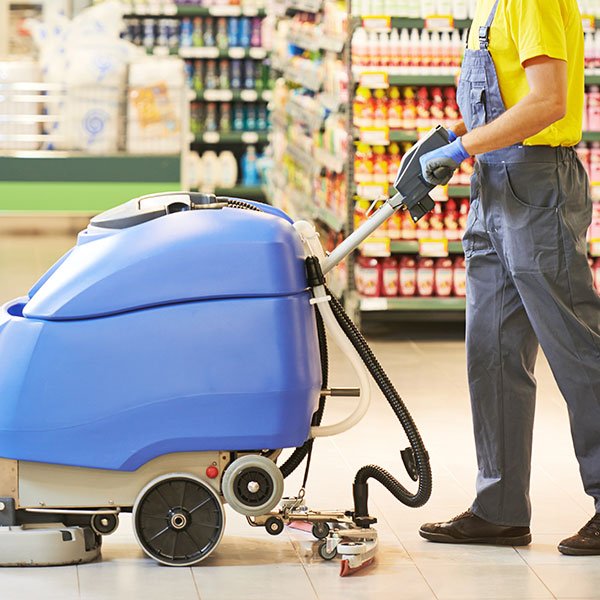
Why Cleanliness Directly Impacts Sales in Retail
A dirty or unkempt shop sends the wrong message. Dusty shelves, smudged glass, or sticky floors can turn potential customers away faster than a closed sign. By contrast, a pristine environment signals quality and care, encouraging longer visits and repeat business.
Key stats clearly show that clean stores attract more visitors and encourage them to shop. Cleanliness has become especially important after the pandemic. For retailers in Melbourne, whether you run supermarkets or showrooms, maintaining a regular cleaning routine helps safeguard your brand and boost your profits.
Daily Closing Routine vs Weekly Deep Clean: What Your Shop Needs
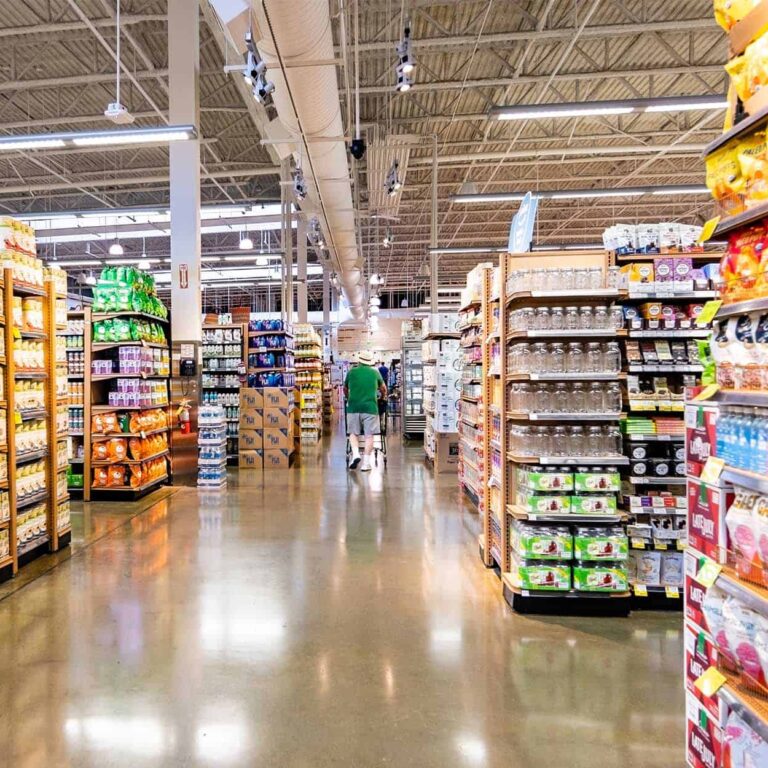
Not every task needs to happen daily, but a smart mix keeps things humming.
Daily Closing Routine (quick and essential for customer-ready appeal):
- Sweep or vacuum high-traffic floors and entry mats to remove dirt and debris.
- Spot-clean spills immediately to avoid slips and stains.
- Wipe down and disinfect high-touch point cleaning areas like counters, POS terminals, door handles, and payment pads.
- Clean glass doors, windows, and display cases for streak-free shine.
- Empty bins and tidy bathrooms for fresh hygiene.
- Quick mop of hard floors if needed.
Weekly Deep Clean (for thorough results, best scheduled after hours):
- Full floor scrubbing or polishing (especially tiled or vinyl in retail spaces).
- Detailed glass and window cleaning retail—inside and out.
- Deep sanitisation of all high-touch surfaces and fixtures.
- Carpet steam cleaning where applicable.
- Grout and edge cleaning in bathrooms and entryways.
This balanced approach ensures your shop stays inviting daily while preventing buildup over time.
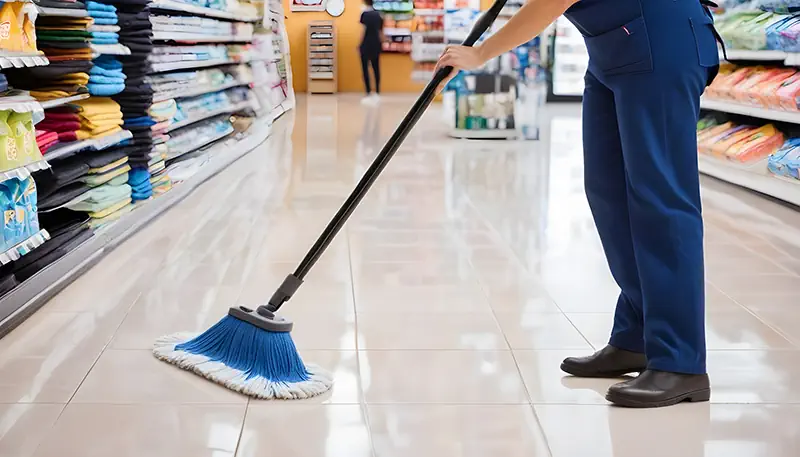
Key Focus Areas for a Spotless Retail Store
1. Floors & Entry Mats
Your floors bear the brunt of daily foot traffic. Mud, dirt, and moisture tracked in from Melbourne’s variable weather can pose a safety hazard and deter customers..
- Daily: Sweep/vacuum all floor space, including under racks. Damp mop hard floors to remove scuffs and stains. Shake out and vacuum entrance mats—they are your first line of defence.
- Weekly: Schedule a professional floor cleaning for retail spaces. For hard floors, this might mean a scrub and re-coating. For carpets, a deep extraction clean removes ingrained dirt and allergens.
2. Glass & Windows
Sparkling glass doors, windows, and display cases are irresistible. They maximise light, enhance your visual merchandising, and project an image of clarity and quality.
- Daily: Use a streak-free cleaner and microfiber cloth to wipe down glass doors, countertops, and any fingerprint-smudged display cabinets.
- Weekly: A professional glass and window cleaning retail service ensures a flawless, streak-free finish on all large windows and glass facades, crucial for street-facing stores and shopping centre locations.
3. High-Touch Point Cleaning
This is the cornerstone of modern retail hygiene, reassuring customers and staff alike. Regular high-touch point cleaning is essential.
- Constantly Throughout the Day: Wipe down PIN pads, countertops, and door handles.
- Daily: Thoroughly sanitise all high-touch surfaces: POS terminals, EFTPOS machines, countertops, door handles, light switches, fitting room hooks, and customer service desks. Don’t forget trolley and basket handles in supermarkets and larger stores.
4. Counters, Displays & Bathrooms
- Counters/Displays: Dust and wipe daily. A cluttered, dusty display devalues your stock.
- Bathrooms: If you have customer facilities, they must be immaculate. Restock supplies, clean mirrors, sanitise fixtures, and ensure floors are clean and dry. This is a non-negotiable for customer comfort.
Adapting to Melbourne’s Seasonal Needs
Your cleaning regimen should adapt to the seasons:
Winter Germs: Increase the frequency of high-touch point cleaning and bathroom sanitisation during flu season. Ensure entryways are kept dry to prevent slips.
Holiday Foot Traffic: In the busy lead-up to Christmas and sales periods, consider increasing the frequency of both daily tidies and professional commercial cleaning visits to manage increased rubbish, floor dirt, and general wear and tear.
A simple “Customer-Ready” cleaning plan you can start this week
| Frequency | Cleaning Tasks |
|---|---|
| Daily (Mon–Sun) |
|
| Weekly |
|
| Monthly / Seasonal |
|
How to Choose a Reliable Retail Cleaning Company in Melbourne
With so many options for commercial cleaners Melbourne, look for:
- Proven experience in retail and shopping centres.
- Modern equipment and eco-friendly products.
- Trained teams with supervisors for quality control.
- Flexible scheduling (after-hours or early mornings).
- Strong reviews and compliance focus.
Neat & Sweet Cleaning Services ticks all these boxes. Operating proudly in Dandenong and surrounding suburbs, we use top-tier tools for efficient, high-quality results. Our skilled cleaners and team leaders deliver consistent, hassle-free service that keeps your shop customer-ready.
Ready for reliable Shop Cleaning in Melbourne?
If you want your store spotless, hygienic, and customer-ready every day, without relying on staff to do it all, we can help.
Book regular retail cleaning or request a quote with Neat & Sweet Cleaning Services in Dandenong and surrounding suburbs. We’ll recommend a cleaning schedule that suits your store type, trading hours, and foot traffic, with a clear scope covering floors, glass, bathrooms, and high-touch points.
Call today or send an enquiry to get a tailored quote.
FAQs - Retail Store Cleaning Melbourne
1) How often should a retail store be professionally cleaned in Melbourne?
For most Melbourne retailers, a mix of daily maintenance and a weekly deep clean delivers the best results. Daily cleaning keeps your shop “customer-ready” by managing visible mess, dust, and high-touch hygiene (POS counter, door handles, baskets, fitting rooms). Weekly deep cleaning tackles build-up that quick mopping can’t address, such as grime lines near entrances, fingerprints on glass, and dust on shelving edges. Busy shops in Dandenong, shopping centres, supermarkets, and high-traffic boutiques often benefit from cleaning 5–7 days per week, especially during peak trading seasons. A professional cleaner can tailor the frequency to foot traffic, flooring type (tiles/vinyl/carpet), store size, and whether you have public bathrooms.
2) What areas should be prioritised in retail store cleaning for best customer impressions?
Customers judge cleanliness mainly on what they see and touch, focusing on floors, glass, counters, and bathrooms. Floors are the largest visual area, and dirty entry zones can make the whole shop look neglected, especially in Melbourne’s wet winter. Clean windows and mirrors boost a store’s premium look. High-touch points like EFTPOS, door handles, and fitting room latches impact hygiene and safety, so daily cleaning keeps the store looking sharp and reduces complaints and walk-outs.
3) What’s the difference between daily shop cleaning and a weekly deep clean?
Daily Shop Cleaning Melbourne routines are designed for consistency and quick, efficient tasks that keep the store presentable: vacuuming, spot mopping, wiping counters, disinfecting high-touch points, emptying bins, and a quick bathroom reset. A weekly deep clean is more detailed and removes the build-up that makes shops look tired over time. This includes full-floor cleaning with edge detailing, deep bathroom sanitation, full glass cleaning (shopfront + internal displays), dusting ledges and higher surfaces, and cleaning behind or around fixtures where dirt collects. The deep clean also helps prevent long-term issues such as stubborn floor haze, grime near entrances, lingering odours, and smudged glass under strong retail lighting.
4) How should retail floor cleaning be handled for different flooring types?
Floor cleaning in retail depends on material and traffic. Vinyl and tiles need careful mopping to avoid streaks and residue that attract dirt. Polished concrete requires gentle cleaning to keep shine without dull patches. Carpet tiles should be vacuumed and quickly spot-treated to prevent stains and odors. Timber floors need moisture control to prevent warping and dullness. In Melbourne, especially Dandenong and shopping centres, entry zones collect grit and moisture; mats and frequent spot cleaning are essential. The goal is clean, dry, slip-safe floors with a professional finish daily.
5) How often should shopfront glass and internal glass displays be cleaned?
Most stores find that cleaning glass and windows at least once a week works well, and in busy areas, you might want to do it even more often. The shopfront glass is the first thing customers notice, smudges, fingerprints, and dust can make a store look less professional from the outside. Inside, glass counters, display cabinets, mirrors, and internal partitions can easily show marks under bright lights. Retailers in beauty, fashion, jewellery, and tech often need to touch up glass multiple times a week because of frequent customer interactions. Plus, Melbourne’s weather can leave dust and spots on exterior windows. Having a regular cleaning routine for your glass will help your shop look its best, improve product visibility, and give a overall sense of cleanliness, without needing to clean the entire store all the time.
6) What are the most important high-touch points to disinfect in a retail shop?
High-touch point cleaning focuses on surfaces that many people touch daily, these are both hygiene hotspots and a major “ick factor” if they look dirty. Priority touch points include EFTPOS terminals, counter edges, door handles, push plates, light switches, baskets/trolleys, fitting room handles, product tester areas (if applicable), fridge handles (for food/health retail), and shared pens or clipboards. During winter or flu season in Melbourne, increasing disinfecting frequency helps reduce staff sick days and customer concerns. It’s not just about using disinfectant, it’s about using it correctly and consistently, including wiping technique and ensuring surfaces are visibly clean first. This is where professional Commercial Cleaners Melbourne routines really stand out.
7) Do retail stores in shopping centres need different cleaning compared to standalone shops?
Yes, shopping centre cleaning often requires a different approach because of centre rules, trading hours, high foot traffic, and strict presentation standards. Many shopping centres require after-hours or early-morning cleaning schedules and may have guidelines for waste disposal, noise levels, and equipment access. Shopfronts are also more visible in centre environments, so glass, entry zones, and floors near the doorway usually need extra attention. Standalone shops might have more flexibility, but they still need strong routines, especially if the shop is street-facing and exposed to outdoor dust and traffic. Either way, a retail cleaning plan should match your location type, customer volume, and store layout so the work is efficient and consistent.
8) How can regular cleaning help reduce bad reviews and customer complaints?
Cleanliness quickly triggers customer feedback, especially in bathrooms, smell, sticky floors, dusty shelves, and smudged glass. Regular Melbourne store cleaning prevents small issues from becoming negative reviews, like managing bins to avoid odours, cleaning floors to prevent grime and slips, and scheduled bathroom cleaning to maintain hygiene. Customers notice a dirty store instantly, even if they don’t comment. Regular cleaning boosts staff confidence, as a clean, organized store encourages better upkeep. This leads to fewer complaints, improved customer experience, and a stronger brand image.
9) What should a retail cleaning checklist include for staff vs professional cleaners?
A smart checklist separates what staff can do quickly (without disrupting trade) from what trained cleaners should handle. Staff tasks often include quick spot tidying, wiping visible spills, keeping the counter tidy, and monitoring bathrooms for supplies. Professional cleaners should handle structured routines such as full floor care, edge detailing, thorough disinfection of high-touch zones, streak-free glass cleaning, deep bathroom sanitisation, dusting higher ledges, and cleaning around and behind fixtures. This division prevents staff burnout and ensures consistent results. It also creates accountability: staff maintain the store during the day, while cleaners reset and restore it properly after hours. That balance is what keeps a shop reliably “customer-ready” in the Melbourne market.
10) How do I choose the right retail store cleaning company in Melbourne?
Choose a provider that understands retail pressures: presentation, hygiene, speed, and consistency. Look for Commercial Cleaners Melbourne with proven retail experience, clear scope (daily vs weekly tasks), quality control (team leaders or supervisors), and modern equipment suitable for your floors and glass. Ask whether they can clean after hours or early mornings, especially for shopping centre stores. A good company will also tailor services to foot traffic, seasonal needs (winter germs, holiday rush), and store type (boutique, supermarket, showroom). Most importantly, choose a cleaning team that communicates well and delivers consistent results, because in retail, “mostly clean” is not enough. Your shop must look customer-ready every single day.
Leave A Comment